
In this article
- What does fatty liver mean?
- Why can MASLD be silent?
- Does every case progress?
- What role does weight play?
- What about alcohol?
- Can diet and exercise help?
- How is MASLD assessed?
- The key point
Introduction
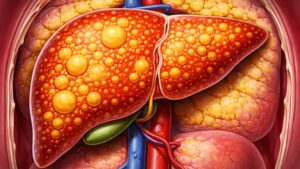
Fatty liver means that excess fat has accumulated in liver cells. There are different causes, so not every case should be described in exactly the same way. Alcohol-related disease and metabolic forms have different contexts even though both involve liver fat.
Key takeaways
- Earlier-stage fatty liver can improve, but reversibility depends on disease stage.
- Lifestyle change is the main evidence-based foundation.
- Supplements and detox products should not be treated as substitutes for assessment or treatment.
- Persistent or severe symptoms need appropriate medical attention.
What does fatty liver mean?
Fatty liver means that excess fat has accumulated in liver cells. There are different causes, so not every case should be described in exactly the same way. Alcohol-related disease and metabolic forms have different contexts even though both involve liver fat.
MASLD stands for metabolic dysfunction-associated steatotic liver disease. It is associated with metabolic risk factors such as excess weight, insulin resistance and type 2 diabetes.
Why can MASLD be silent?
Early fatty liver may produce few or no symptoms. A person can therefore feel well while an investigation identifies liver fat or abnormal blood tests. This is why symptoms alone are not a reliable way to rule it out.
If you have a relevant risk factor or an abnormal test, your clinician may decide whether further assessment is appropriate.
Does every case progress?
No. People can have liver fat without developing advanced scarring, while others develop inflammation and fibrosis. Progression depends on several factors and cannot be predicted from one symptom or one blood-test number.
This is also why ‘fatty liver’ is not a complete description of severity. The degree of fibrosis is an important part of clinical assessment.
What role does weight play?
For people who are overweight, gradual weight loss can reduce liver fat and improve metabolic health. The goal should be sustainable rather than extreme. Our article on [reversing fatty liver](fatty liver reversal) explains the evidence around weight loss and disease stage.
Not every person with MASLD has the same weight profile, so weight should not be treated as the only explanation or solution.
What about alcohol?
The term MASLD focuses on metabolic dysfunction, but alcohol can still matter to overall liver health. People with liver disease may receive individual advice that is stricter than general population guidance.
For general UK guidance, see our [alcohol and the liver](alcohol) article.
Can diet and exercise help?
Yes. A balanced diet and regular activity are central to managing metabolic risk. Exercise can improve insulin sensitivity and reduce liver fat even when major weight loss does not occur.
The practical aim is a routine that can continue for months and years rather than a short programme designed around a dramatic before-and-after result.
How is MASLD assessed?
Assessment may involve blood tests, medical history, metabolic risk factors and, when appropriate, imaging or fibrosis assessment. A liver enzyme level alone cannot tell you the full stage.
Our [liver function tests](liver tests) guide explains the limits of blood tests and why clinicians use more than one piece of information.
The key point
MASLD is common enough to deserve awareness but varied enough that one-size-fits-all advice is inappropriate. Early assessment creates an opportunity to address modifiable risk factors before advanced scarring develops.
Why maintenance matters after improvement
The most useful target is therefore a sustainable routine that can continue after the initial motivation of a diagnosis or health scare has faded.
Liver fat can return if the underlying metabolic drivers return. This is why maintenance is part of the treatment story rather than an afterthought. A short diet followed by a return to the previous pattern may not provide lasting benefit.
What does the research suggest about weight loss?
These figures are useful evidence, but they should not be converted into a promise that a particular percentage of weight loss will produce the same result for every reader. Individual disease stage and circumstances matter.
The supplied Nutriscope reference article cites the 2015 Vilar-Gomez study, which found a dose-response relationship between sustained weight loss and histological improvement in people with biopsy-proven NASH. It reported that greater weight loss was associated with greater resolution of steatohepatitis and, at higher levels of weight loss, improvement in fibrosis.
Why the word ‘reversed’ needs context
A responsible article therefore needs to define what has improved. A reduction in liver fat can happen before changes in fibrosis, and advanced scarring may remain even when other measures improve.
When people say a condition has been reversed, they may mean that liver fat has fallen, liver enzymes have improved, inflammation has settled or fibrosis has regressed. These are not identical outcomes.
Frequently asked questions
What is the most important thing for liver health?
There is no single action that applies to everyone. Alcohol intake, diet quality, metabolic health, physical activity and any existing liver condition all matter.
Can a supplement replace lifestyle changes?
No. A supplement should not be presented as a substitute for medical care or for addressing established lifestyle risk factors.
When should I speak to a doctor?
Seek advice for persistent or concerning symptoms, abnormal liver tests, a known liver condition or significant risk factors. Urgent symptoms such as vomiting blood, black stools, severe confusion or jaundice need prompt medical attention.
Sources
- NHS — Fatty liver disease
- British Liver Trust — Liver health
- PubMed — Vilar-Gomez et al. 2015
- NHS — Liver disease
Editorial safety note: This content is general health information, not a diagnosis or individual medical advice. Claims about symptoms, supplements and treatment should be checked against the cited source before publication.