
In this article
- How much fibre should adults aim for?
- Where can you get fibre at breakfast?
- How can lunch add more fibre?
- What about dinner and snacks?
- Why fluids matter when increasing fibre
- Can too much fibre cause bloating?
- Soluble versus insoluble fibre
- A practical target
Introduction
UK guidance recommends adults aim for about 30g of fibre a day. Many people eat less than this, which is why increasing fibre is a practical public-health goal.
Key takeaways
- Gut health is influenced by diet, fibre, fluids, movement and individual digestive conditions rather than one ‘gut reset’ product.
- Fibre variety is an important foundation of a healthy diet, but increases should be gradual when symptoms are present.
- Probiotics and fermented foods are not interchangeable, and evidence depends on the specific product, strain and outcome.
- Persistent or concerning digestive symptoms should be assessed rather than automatically attributed to the microbiome.
How much fibre should adults aim for?
UK guidance recommends adults aim for about 30g of fibre a day. Many people eat less than this, which is why increasing fibre is a practical public-health goal.
Fibre is found in plant foods, but different types behave differently in the digestive system. This is one reason the goal should be variety rather than simply adding a single fibre powder.
Where can you get fibre at breakfast?
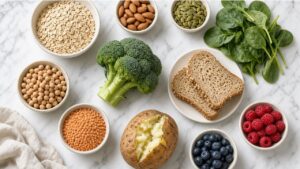
Oats and higher-fibre cereals can provide a useful start. Wholemeal toast, fruit, nuts and seeds can also contribute. Porridge is particularly versatile because you can add fruit, nuts or seeds without changing the basic meal.
If your breakfast currently contains very little fibre, increasing it gradually may be more comfortable than making a sudden jump.
How can lunch add more fibre?
Wholemeal bread, wholegrain pasta, beans, lentils, vegetables and fruit can all contribute. Adding chickpeas or lentils to a salad, soup or curry is a simple way to increase fibre without changing the meal completely.
Check food labels where useful. The NHS describes foods containing 6g or more of fibre per 100g as high-fibre foods.
What about dinner and snacks?
Potatoes with their skins, brown rice, wholegrain pasta and vegetables can make dinner more fibre-rich. Snacks such as fruit, unsalted nuts, seeds or oatcakes can add smaller amounts across the day.
The goal is not to reach 30g in one meal. Spreading fibre across breakfast, lunch, dinner and snacks is usually easier.
Why fluids matter when increasing fibre
Fibre absorbs water and helps give stools bulk and softness. If someone suddenly increases fibre without enough fluid, constipation or discomfort can sometimes become worse rather than better.
Drink regularly through the day, with water as a straightforward choice. Individual fluid needs vary, particularly with weather, activity and medical conditions.
Can too much fibre cause bloating?
Yes. Some fibres are readily fermented by gut bacteria and can increase gas. People with IBS may also find that particular high-fibre foods trigger symptoms.
This does not mean fibre is bad. It means the type, amount and speed of increase matter. If symptoms are significant, a dietitian can help tailor the approach.
Soluble versus insoluble fibre
Soluble fibre includes substances found in oats and some fruits, while insoluble fibre is found in foods such as wheat bran and some nuts. Resistant starch is another type that can be fermented by gut microbes.
A mixed diet naturally provides several types, which is another reason variety is more useful than focusing on a single fibre product.
A practical target
Build towards the UK 30g recommendation gradually, using ordinary foods first. For more detail, see fibre and gut health and the Gut Health hub.
A simple 30g strategy
This approach makes the target a pattern rather than a daily mathematical exercise.
Instead of trying to calculate every gram, build fibre into several meals. Oats or a higher-fibre cereal can contribute at breakfast; wholegrain bread plus vegetables or pulses can contribute at lunch; potatoes with skins, wholegrains and vegetables can contribute at dinner; fruit, nuts or seeds can fill smaller gaps.
What if fibre makes you feel worse?
If symptoms become noticeably worse after increasing fibre, slow the increase rather than assuming you should stop all fibre. A dietitian can help identify which types and amounts are appropriate for your symptoms.
More fibre is not automatically better for every person at every moment. Some people with IBS find particular high-fibre or fermentable foods increase bloating or pain. People with certain bowel conditions may also need individual dietary advice.
How to increase fibre without making meals complicated
The NHS recommends choosing a variety of fibre sources. This is more useful than relying on bran, a fibre powder or one high-fibre cereal every day. Variety also helps keep the rest of the diet nutritionally balanced.
Start with one change at a time. Replace white bread with wholemeal bread at one meal, add oats to breakfast, include beans in a curry or soup, or keep fruit available for snacks. These small changes can gradually move total fibre intake upwards.
When should you ask for dietary advice?
A personalised plan can be more useful than repeatedly changing foods based on online lists.
If constipation, diarrhoea, bloating or abdominal pain continues despite sensible changes, ask a GP or dietitian for advice. People with inflammatory bowel disease or other bowel conditions may need a tailored fibre approach.
What are common mistakes when increasing fibre?
If you have IBS, another mistake is assuming that every high-fibre food must be good for your symptoms. Individual tolerance matters, and some fermentable foods can increase bloating.
One mistake is increasing the amount too quickly. Another is relying on a single product such as bran while neglecting vegetables, fruit, pulses and wholegrains. A third is increasing fibre while drinking very little.
Can fibre help more than bowel regularity?
The benefits are cumulative and long-term. Fibre is not a quick treatment that needs to produce a noticeable sensation after every meal.
Fibre is associated with a range of health benefits beyond constipation, including lower risk of cardiovascular disease, type 2 diabetes and bowel cancer. Different fibres behave differently, which is one reason a varied diet is preferable to relying on a single supplement.
Frequently asked questions
How can I improve my gut health naturally?
Focus on a varied, fibre-rich diet, regular fluids, physical activity and a consistent routine. If you have a diagnosed digestive condition, individual advice may be needed.
Are probiotics necessary for everyone?
No. Some specific probiotics may help particular symptoms or conditions, but broad claims are not equally supported. Healthy people do not automatically need a probiotic supplement.
How much fibre should I eat?
UK guidance recommends around 30g of fibre a day for adults. Increase gradually and use a variety of foods rather than relying on one fibre source.
When should digestive symptoms be checked?
Persistent or severe pain, blood in the stool, unexplained weight loss, repeated vomiting or significant changes in bowel habit should be discussed with a healthcare professional.
Sources
- NHS — Digestive health
- NHS — Good foods to help your digestion
- NHS — How to get more fibre into your diet
- NHS — Probiotics
- NHS — IBS
- NHS — Constipation
- British Dietetic Association — Fibre
- British Dietetic Association — Probiotics and gut health
- British Dietetic Association — Fermented foods
Editorial safety note: This is general health information, not a diagnosis or individual medical advice. Medical conditions, persistent symptoms, pregnancy, medication use and weakened immunity may require personalised professional guidance.