
In this article
- What foods are most useful for gut health?
- Oats and wholegrains
- Beans, lentils and chickpeas
- Fruit and vegetables
- Yoghurt, kefir and fermented foods
- Nuts and seeds
- What should you limit?
- Build meals rather than chase superfoods
Introduction
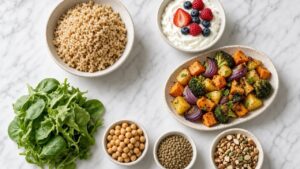
A gut-friendly diet is not a list of ten miracle foods. It is a pattern that regularly supplies fibre, fluids and a variety of plant foods. Oats, wholegrains, beans, lentils, vegetables, fruit, nuts and seeds are practical foundations.
Key takeaways
- Gut health is influenced by diet, fibre, fluids, movement and individual digestive conditions rather than one ‘gut reset’ product.
- Fibre variety is an important foundation of a healthy diet, but increases should be gradual when symptoms are present.
- Probiotics and fermented foods are not interchangeable, and evidence depends on the specific product, strain and outcome.
- Persistent or concerning digestive symptoms should be assessed rather than automatically attributed to the microbiome.
What foods are most useful for gut health?
A gut-friendly diet is not a list of ten miracle foods. It is a pattern that regularly supplies fibre, fluids and a variety of plant foods. Oats, wholegrains, beans, lentils, vegetables, fruit, nuts and seeds are practical foundations.
The advantage of ordinary foods is that they provide more than one nutrient or microbial substrate at a time. This is more realistic than building a diet around a single powder.
Oats and wholegrains
Oats contain soluble fibre and are an easy breakfast option. Wholemeal bread, brown rice, wholegrain pasta and other higher-fibre grains can contribute throughout the day.
If you are not used to wholegrains, introduce them gradually. Taste and texture often become easier to adapt to when changes are made one meal at a time.
Beans, lentils and chickpeas
Pulses provide fibre and plant protein and can be added to soups, curries, salads and stews. They are particularly useful for increasing variety because different pulses provide different combinations of fibre and nutrients.
Some people notice more gas when they first increase pulses. Rinsing canned pulses and increasing portions gradually may make the transition easier.
Fruit and vegetables
Fruit and vegetables provide fibre as well as vitamins, minerals and other plant compounds. There is no requirement to choose a special ‘gut fruit’. Variety across the week is more useful.
If raw vegetables trigger symptoms, cooked vegetables may be easier to tolerate. This is especially relevant for people who experience IBS symptoms.
Yoghurt, kefir and fermented foods
Live yoghurt can provide live cultures, while fermented foods can add variety. However, fermented does not automatically mean probiotic, and not every fermented food has been shown to provide a specific health benefit.
The BDA notes that evidence for fermented foods and gut-health outcomes is still developing. Enjoy them as part of a balanced diet rather than as a guaranteed treatment.
Nuts and seeds
Nuts and seeds can add fibre and unsaturated fats. A small handful can work as a snack or be added to porridge or yoghurt.
Choose versions with little added salt or sugar where possible. Portion size still matters because nuts and seeds are energy-dense.
What should you limit?
Highly processed foods are not automatically forbidden, but a diet dominated by them can leave less room for fibre-rich plant foods. Large amounts of fatty, spicy or fizzy foods may also worsen symptoms in some people, particularly those with reflux or IBS.
Your own symptom pattern matters. The NHS recommends keeping a food diary when particular foods appear to trigger IBS symptoms.
Build meals rather than chase superfoods
A simple plate can combine a higher-fibre carbohydrate, vegetables, a protein source and a suitable fat. Repeat that structure across the week with different ingredients.
For more detailed guidance, link this article to fibre and gut health, fermented foods and the Gut Health hub.
What does a realistic weekly pattern look like?
There is no need to consume every trending gut-health food. Consistency with a varied diet is more important than novelty.
Think in terms of repetition and variety: oats several mornings, vegetables at lunch and dinner, pulses a few times a week, fruit as a regular option, nuts or seeds where suitable, and yoghurt or another tolerated fermented food if you enjoy it.
How should you adapt foods if you have a sensitive gut?
People with IBS may need a more individual approach. The NHS recommends a food and symptom diary, and more restrictive dietary approaches are better guided by a dietitian.
A food can be nutritious and still trigger symptoms in a particular person. If onions, beans, large portions of wholegrains or certain fruits repeatedly cause problems, record the pattern rather than immediately removing everything.
Do you need to buy gut-health products?
Food also provides a wider combination of nutrients. A bowl of oats, for example, supplies more than a single isolated fibre ingredient, while a meal containing beans and vegetables provides several different plant compounds.
Not usually. Many products marketed for gut health are simply concentrated versions of nutrients or microorganisms that can also be obtained through ordinary foods. Supplements can have specific uses, but a supermarket shopping list is often a better starting point.
How should this article be used?
The strongest content strategy is to connect this article to fibre, probiotics, fermented foods and condition-specific pages so readers can move from general nutrition to their particular question.
Use food lists as ideas, not rules. Choose foods you enjoy, can afford and tolerate. If you have IBS or another digestive diagnosis, adapt the list rather than forcing foods that worsen symptoms.
Does organic food improve the microbiome?
For gut health, the type and variety of food you eat are generally more practical considerations than turning every purchase into a microbiome decision.
There is not enough evidence to say that buying organic automatically creates a healthier gut microbiome. Organic and conventionally produced foods can both contribute to a varied diet.
What about drinks for gut health?
If reflux is a problem, caffeine and certain acidic or fizzy drinks may be triggers. Your own symptom pattern should guide choices.
Water is a straightforward choice for hydration. Some people find caffeine, fizzy drinks or large amounts of alcohol worsen digestive symptoms. Herbal teas can be an alternative if tolerated, but a tea does not need a ‘digestive’ label to be useful.
Frequently asked questions
How can I improve my gut health naturally?
Focus on a varied, fibre-rich diet, regular fluids, physical activity and a consistent routine. If you have a diagnosed digestive condition, individual advice may be needed.
Are probiotics necessary for everyone?
No. Some specific probiotics may help particular symptoms or conditions, but broad claims are not equally supported. Healthy people do not automatically need a probiotic supplement.
How much fibre should I eat?
UK guidance recommends around 30g of fibre a day for adults. Increase gradually and use a variety of foods rather than relying on one fibre source.
When should digestive symptoms be checked?
Persistent or severe pain, blood in the stool, unexplained weight loss, repeated vomiting or significant changes in bowel habit should be discussed with a healthcare professional.
Sources
- NHS — Digestive health
- NHS — Good foods to help your digestion
- NHS — How to get more fibre into your diet
- NHS — Probiotics
- NHS — IBS
- NHS — Constipation
- British Dietetic Association — Fibre
- British Dietetic Association — Probiotics and gut health
- British Dietetic Association — Fermented foods
Editorial safety note: This is general health information, not a diagnosis or individual medical advice. Medical conditions, persistent symptoms, pregnancy, medication use and weakened immunity may require personalised professional guidance.