
In this article
- What is IBS?
- Why is there no single IBS diet?
- What daily habits can help?
- Where do probiotics fit?
- What about low-FODMAP diets?
- IBS versus food intolerance
- When should symptoms be investigated?
- The balanced approach
Introduction
Irritable bowel syndrome is a common digestive condition that can cause abdominal pain or cramps, bloating, diarrhoea and constipation. Symptoms often come and go and can vary significantly between people.
Key takeaways
- Gut health is influenced by diet, fibre, fluids, movement and individual digestive conditions rather than one ‘gut reset’ product.
- Fibre variety is an important foundation of a healthy diet, but increases should be gradual when symptoms are present.
- Probiotics and fermented foods are not interchangeable, and evidence depends on the specific product, strain and outcome.
- Persistent or concerning digestive symptoms should be assessed rather than automatically attributed to the microbiome.
What is IBS?
Irritable bowel syndrome is a common digestive condition that can cause abdominal pain or cramps, bloating, diarrhoea and constipation. Symptoms often come and go and can vary significantly between people.
The exact cause is not fully understood. Factors can include how quickly food moves through the gut, sensitivity of the digestive tract, previous gastroenteritis, stress and family history.
Why is there no single IBS diet?
Different people have different triggers. One person may react to a particular high-fibre food, while another tolerates it well. Some people notice problems with large amounts of fatty or spicy foods, caffeine or particular fermentable carbohydrates.
The NHS recommends keeping a food and symptom diary rather than removing large numbers of foods automatically.
What daily habits can help?
Regular meals, adequate fluids, physical activity and relaxation strategies can help some people manage symptoms. Eating slowly and avoiding very large meals may also be useful.
The goal is symptom control without unnecessarily restricting the diet.
Where do probiotics fit?
The NHS suggests that some people with IBS may try probiotics for around a month to see whether symptoms improve. The effect is not guaranteed and may depend on the product.
If there is no meaningful improvement, there may be little reason to continue the same product indefinitely.
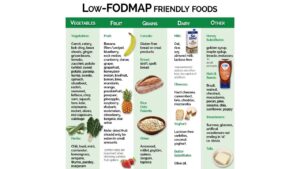
What about low-FODMAP diets?
A low-FODMAP diet can help some people with IBS, but it is more restrictive than ordinary healthy eating. It is generally better approached with support from a dietitian who can guide the elimination and reintroduction stages.
The aim is not to remain on a highly restrictive diet forever.
IBS versus food intolerance
Food intolerance and IBS can overlap, but they are not identical diagnoses. Removing gluten or dairy without assessment can sometimes make it harder to identify what is actually causing symptoms.
If you suspect a specific intolerance, discuss testing or dietary assessment with a healthcare professional.
When should symptoms be investigated?
IBS should not be assumed when there are warning signs such as unexplained weight loss, blood in the stool, persistent vomiting, anaemia or other concerning changes. A clinician can decide whether further investigation is needed.
The balanced approach
IBS management is about finding an individual routine that reduces symptoms while keeping nutrition adequate. Use the IBS guide alongside the NHS advice rather than following generic gut-health rules.
Why psychological support can be part of IBS care
For people whose symptoms have a large impact on daily life, healthcare professionals may discuss several treatment approaches rather than relying only on diet.
Stress management is not an accusation that IBS is imaginary. The nervous system influences gut sensitivity and motility, so strategies that reduce stress can be relevant to symptom management.
How should you keep a food diary?
If a suspected trigger appears repeatedly, discuss it with a dietitian or clinician before removing major food groups permanently.
Record meals, drinks, symptoms, bowel movements and relevant circumstances for a limited period. You do not need to record every ingredient forever. The purpose is to identify repeatable patterns.
Why IBS can be so individual
This is why online lists of ‘best IBS foods’ can be frustrating. The useful approach is to identify the pattern that applies to you.
Two people can both have IBS but experience very different symptoms. One may mainly have constipation, another diarrhoea, and another alternating bowel habits with prominent bloating or pain.
What should the long-term goal be?
If symptoms change significantly or warning signs appear, seek reassessment rather than assuming it is simply another IBS flare.
The goal is not to achieve a completely symptom-free digestive system every day. IBS can fluctuate. A realistic target is reducing the frequency or severity of symptoms while maintaining a nutritionally adequate diet and normal daily activities.
Can exercise really help IBS?
The best activity is the one that can be maintained. Walking, cycling, swimming and other moderate activities may be easier to sustain than very intense training.
The NHS includes exercise as part of IBS lifestyle management. Movement can support general wellbeing and may help some people manage symptoms.
Why elimination diets can become a problem
A structured approach is better: identify a suspected trigger, test it systematically where appropriate and reintroduce foods when possible. Dietitian support can be particularly valuable for restrictive approaches.
When people have recurring symptoms, it is tempting to remove one food after another. Over time this can create a diet that is unnecessarily restrictive and difficult to maintain.
Frequently asked questions
How can I improve my gut health naturally?
Focus on a varied, fibre-rich diet, regular fluids, physical activity and a consistent routine. If you have a diagnosed digestive condition, individual advice may be needed.
Are probiotics necessary for everyone?
No. Some specific probiotics may help particular symptoms or conditions, but broad claims are not equally supported. Healthy people do not automatically need a probiotic supplement.
How much fibre should I eat?
UK guidance recommends around 30g of fibre a day for adults. Increase gradually and use a variety of foods rather than relying on one fibre source.
When should digestive symptoms be checked?
Persistent or severe pain, blood in the stool, unexplained weight loss, repeated vomiting or significant changes in bowel habit should be discussed with a healthcare professional.
Sources
- NHS — Digestive health
- NHS — Good foods to help your digestion
- NHS — How to get more fibre into your diet
- NHS — Probiotics
- NHS — IBS
- NHS — Constipation
- British Dietetic Association — Fibre
- British Dietetic Association — Probiotics and gut health
- British Dietetic Association — Fermented foods
Editorial safety note: This is general health information, not a diagnosis or individual medical advice. Medical conditions, persistent symptoms, pregnancy, medication use and weakened immunity may require personalised professional guidance.