
In this article
- What is the gut microbiome?
- What do gut microbes actually do?
- Can you have a ‘bad’ microbiome?
- How does diet influence the microbiome?
- What about probiotics?
- Can fermented foods change the microbiome?
- Should you try to ‘feed good bacteria’?
- The key point
Introduction
The gut microbiome refers to the community of microorganisms living in the digestive tract. It includes bacteria and other microbes, and researchers are learning more about how these organisms interact with food, the intestinal environment and the rest of the body.
Key takeaways
- Gut health is influenced by diet, fibre, fluids, movement and individual digestive conditions rather than one ‘gut reset’ product.
- Fibre variety is an important foundation of a healthy diet, but increases should be gradual when symptoms are present.
- Probiotics and fermented foods are not interchangeable, and evidence depends on the specific product, strain and outcome.
- Persistent or concerning digestive symptoms should be assessed rather than automatically attributed to the microbiome.
What is the gut microbiome?
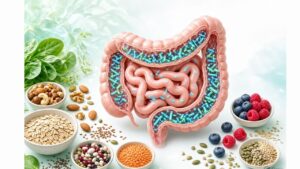
The gut microbiome refers to the community of microorganisms living in the digestive tract. It includes bacteria and other microbes, and researchers are learning more about how these organisms interact with food, the intestinal environment and the rest of the body.
It is useful to think of the microbiome as an ecosystem rather than a list of ‘good’ and ‘bad’ bacteria. Different organisms perform different functions, and the composition of the community can vary between healthy people.
What do gut microbes actually do?
Gut microorganisms can help break down parts of food that humans do not fully digest themselves. Fibre is one example: some types are fermented by bacteria in the large intestine, producing metabolites such as short-chain fatty acids.
This does not mean that every fibre supplement produces the same effect. Fibre differs in solubility, fermentability and other properties, which is one reason variety matters.
Can you have a ‘bad’ microbiome?
Online marketing often describes dysbiosis as though there is one universal abnormal microbiome. In reality, microbial communities are complex and vary between individuals. Researchers use the term dysbiosis in several contexts, but there is not a single home test that can tell you whether your microbiome is healthy.
Commercial microbiome tests can therefore be interesting, but consumers should be cautious about claims that a test can prescribe a precise supplement programme.
How does diet influence the microbiome?
Diet provides substrates that gut microbes can use. A varied intake of plant foods increases exposure to different types of fibre and other compounds. The NHS recommends around 30g of fibre a day for adults as part of a healthy balanced diet.
Increasing fibre gradually can be particularly important for people who currently eat very little fibre, because a sudden large increase may temporarily increase gas or bloating.
What about probiotics?
Probiotics are live microorganisms supplied in foods or supplements. Some specific strains have evidence for particular symptoms or conditions, but the effect is not interchangeable between strains. A probiotic that helps one problem cannot automatically be expected to help another.
The NHS also notes that probiotic supplements are regulated as foods rather than medicines, so the evidence and quality assurance are not equivalent to pharmaceutical products.
Can fermented foods change the microbiome?
Fermented foods such as yoghurt, kefir and some vegetables are popular in gut-health advice. They can be part of a varied diet, but the evidence that fermented foods broadly improve the microbiome or prevent disease remains an active research area.
The British Dietetic Association notes that much of the evidence is still developing. It is therefore reasonable to eat fermented foods if you enjoy them, but not to treat them as a guaranteed microbiome therapy.
Should you try to ‘feed good bacteria’?
Eating a varied, fibre-rich diet is a sensible way to support the gut ecosystem without needing to identify individual bacteria. Oats, beans, lentils, vegetables, fruit, nuts and seeds are practical options.
For more on this, see fibre and gut health and prebiotics.
The key point
The microbiome is real and important, but it is not a simple good-bacteria-versus-bad-bacteria system. The most defensible advice is to support overall diet quality and digestive health while treating microbiome-specific supplements with appropriate caution.
Why food variety is more practical than microbiome optimisation
This is the key editorial distinction for gut-health content: microbiome research is valuable, but readers do not need to turn every scientific finding into a supplement purchase.
Trying to optimise dozens of individual bacterial species would be impossible in everyday life. A varied diet is a more practical approach. Different plant foods provide different fibres and other compounds, while adequate protein, fluids and overall nutrition support the wider digestive system.
How medicines can affect the gut
That does not mean people should avoid medicines because they are worried about the microbiome. Antibiotics and other medicines can be essential when medically indicated. The useful response is to follow prescribing advice and seek professional guidance if digestive symptoms persist after treatment.
The gut ecosystem can be influenced by medicines, particularly antibiotics, because antibiotics can alter bacterial populations. Illness, changes in diet and other factors can also change the microbial environment.
Why microbiome diversity is discussed
What matters is the overall ecosystem, including what microorganisms are present, what they are doing, what food reaches them and how the intestinal environment behaves. This is one reason consumer microbiome reports should be interpreted cautiously. A list of bacteria without clinical context does not necessarily tell you what action to take.
Researchers often talk about microbial diversity because a varied community can perform many different functions. However, diversity by itself is not a simple health score. A person cannot assume that a higher number of bacterial species is automatically better in every circumstance.
What a realistic microbiome strategy looks like
This approach supports the ecosystem without pretending that modern science can provide a single ideal microbiome for every person.
Instead of trying to control individual microbes, build a diet that supplies different types of fibre and plant foods. Include wholegrains, pulses, vegetables, fruit, nuts and seeds as tolerated. Add fermented foods if you enjoy them, while remembering that evidence for specific health effects varies.
Why antibiotics should not be feared
If you experience digestive symptoms after antibiotics, discuss them with a healthcare professional. The answer may be time, dietary adjustment or investigation of another cause rather than automatically taking a probiotic.
Antibiotics can alter gut bacteria, but they are prescribed because they can be necessary to treat bacterial infections. Avoiding a clinically indicated antibiotic because of microbiome concerns can be harmful.
Can a microbiome test tell you what to eat?
A result should therefore not be treated like a blood test with a universally agreed target range. If a test recommends a long list of supplements, look for evidence that the recommendation improves a meaningful health outcome rather than simply changing the measured bacteria.
Commercial stool and microbiome tests can identify microorganisms or microbial patterns, but finding a bacterium does not automatically tell you which food or supplement will improve your health. The science linking individual microbiome profiles to personalised dietary prescriptions is still developing.
Frequently asked questions
How can I improve my gut health naturally?
Focus on a varied, fibre-rich diet, regular fluids, physical activity and a consistent routine. If you have a diagnosed digestive condition, individual advice may be needed.
Are probiotics necessary for everyone?
No. Some specific probiotics may help particular symptoms or conditions, but broad claims are not equally supported. Healthy people do not automatically need a probiotic supplement.
How much fibre should I eat?
UK guidance recommends around 30g of fibre a day for adults. Increase gradually and use a variety of foods rather than relying on one fibre source.
When should digestive symptoms be checked?
Persistent or severe pain, blood in the stool, unexplained weight loss, repeated vomiting or significant changes in bowel habit should be discussed with a healthcare professional.
Sources
- NHS — Digestive health
- NHS — Good foods to help your digestion
- NHS — How to get more fibre into your diet
- NHS — Probiotics
- NHS — IBS
- NHS — Constipation
- British Dietetic Association — Fibre
- British Dietetic Association — Probiotics and gut health
- British Dietetic Association — Fermented foods
Editorial safety note: This is general health information, not a diagnosis or individual medical advice. Medical conditions, persistent symptoms, pregnancy, medication use and weakened immunity may require personalised professional guidance.