
In this article
- What causes bloating?
- Constipation and trapped gas
- Fizzy drinks and eating speed
- IBS and bloating
- Should you eliminate gluten or dairy?
- What about probiotics?
- When is bloating a reason to seek help?
- A sensible first step
Introduction
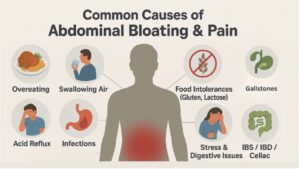
Bloating is a common digestive symptom with many possible causes. Eating quickly, swallowing air, constipation, fizzy drinks, certain foods and IBS can all contribute. Some people also notice bloating around changes in their menstrual cycle or after particular meals.
Key takeaways
- Gut health is influenced by diet, fibre, fluids, movement and individual digestive conditions rather than one ‘gut reset’ product.
- Fibre variety is an important foundation of a healthy diet, but increases should be gradual when symptoms are present.
- Probiotics and fermented foods are not interchangeable, and evidence depends on the specific product, strain and outcome.
- Persistent or concerning digestive symptoms should be assessed rather than automatically attributed to the microbiome.
What causes bloating?
Bloating is a common digestive symptom with many possible causes. Eating quickly, swallowing air, constipation, fizzy drinks, certain foods and IBS can all contribute. Some people also notice bloating around changes in their menstrual cycle or after particular meals.
Because the causes vary, there is no universal anti-bloating diet.
Constipation and trapped gas
If stool is moving slowly through the bowel, gas and abdominal pressure can become more noticeable. Improving constipation can therefore improve bloating for some people.
The NHS recommends gradually increasing fibre, drinking enough fluid and being active as part of constipation management.
Fizzy drinks and eating speed
Carbonated drinks can increase the amount of gas in the digestive tract, while eating quickly can increase swallowed air. Slowing meals and choosing still drinks can be simple experiments for people who notice these triggers.
A food and symptom diary can help identify patterns without requiring unnecessary food restriction.
IBS and bloating
Bloating is one of the common symptoms associated with IBS. IBS can involve abdominal pain, constipation, diarrhoea or changes between bowel habits. There is no single diet that works for everyone.
The NHS recommends balanced eating, regular meals, exercise, fluids and identifying personal triggers. More specialised diets should ideally be guided by a healthcare professional.
Should you eliminate gluten or dairy?
Not automatically. Some people have coeliac disease, lactose intolerance or another condition that requires dietary changes, but bloating alone does not prove that gluten or dairy is the cause.
Removing multiple food groups without a diagnosis can make the diet unnecessarily restrictive and may reduce nutritional variety.
What about probiotics?
Some probiotics may help particular IBS symptoms, but evidence varies by product. They should not be treated as a guaranteed anti-bloating supplement.
If you try one, use a clear trial period and assess whether your symptoms actually change.
When is bloating a reason to seek help?
Persistent or worsening bloating, unexplained weight loss, blood in the stool, persistent vomiting, severe pain or a significant change in bowel habit warrants medical assessment. Do not assume every persistent symptom is simply ‘bad gut bacteria’.
A sensible first step
Look at meal speed, fizzy drinks, constipation, fibre changes and personal triggers. Make one change at a time so you can tell what helped. For more detail, link to bloating, IBS and constipation.
What lifestyle changes are worth trying first?
Make one change at a time where possible. This gives you a better chance of identifying what actually helps.
Eat at a comfortable pace, avoid very large meals, reduce fizzy drinks if they trigger symptoms, stay active and address constipation if present. Regular meals may also help some people with IBS.
Should you use digestive teas or supplements?
If bloating is persistent, identifying the cause is more important than repeatedly masking the symptom.
Peppermint and other herbal products are often marketed for bloating, but evidence and suitability vary. Some products can interact with medicines or aggravate reflux. A supplement should therefore not be assumed to be harmless simply because it is marketed for digestion.
Why bloating can change from day to day
Keeping a short symptom diary can help identify whether the pattern relates to particular foods, constipation, meal timing or other circumstances. It is more useful than removing ten foods at once.
Digestive symptoms are influenced by meal size, food composition, bowel movements, stress and routine. A person may therefore feel comfortable after one meal and bloated after another without having developed a new disease.
Why persistent bloating should not be self-diagnosed
The goal of gut-health content should be to help readers make sensible decisions, not to encourage them to diagnose their microbiome from a symptom list.
Bloating is common, but persistent or new symptoms can have many causes. If it occurs alongside unexplained weight loss, blood in the stool, persistent vomiting, severe pain or a major change in bowel habit, seek medical assessment.
What if bloating is linked to constipation?
Do not suddenly add several fibre powders while ignoring fluid intake. A gradual approach is usually easier to assess.
Constipation can make the abdomen feel full or uncomfortable. If stools are hard or infrequent, address constipation with gradual fibre, fluids and activity where appropriate.
Could your eating pattern be contributing?
This is not a universal rule. The useful approach is to observe your own response rather than adopting a rigid meal schedule because an online article recommends it.
Large meals, eating quickly and long gaps followed by very large portions can make digestive symptoms more noticeable in some people. Regular, moderate meals may be easier to tolerate.
Frequently asked questions
How can I improve my gut health naturally?
Focus on a varied, fibre-rich diet, regular fluids, physical activity and a consistent routine. If you have a diagnosed digestive condition, individual advice may be needed.
Are probiotics necessary for everyone?
No. Some specific probiotics may help particular symptoms or conditions, but broad claims are not equally supported. Healthy people do not automatically need a probiotic supplement.
How much fibre should I eat?
UK guidance recommends around 30g of fibre a day for adults. Increase gradually and use a variety of foods rather than relying on one fibre source.
When should digestive symptoms be checked?
Persistent or severe pain, blood in the stool, unexplained weight loss, repeated vomiting or significant changes in bowel habit should be discussed with a healthcare professional.
Sources
- NHS — Digestive health
- NHS — Good foods to help your digestion
- NHS — How to get more fibre into your diet
- NHS — Probiotics
- NHS — IBS
- NHS — Constipation
- British Dietetic Association — Fibre
- British Dietetic Association — Probiotics and gut health
- British Dietetic Association — Fermented foods
Editorial safety note: This is general health information, not a diagnosis or individual medical advice. Medical conditions, persistent symptoms, pregnancy, medication use and weakened immunity may require personalised professional guidance.